How Does Thermal Imaging Transform Accuracy in Critical Observation Applications?
Thermal imaging has become a foundational technology across industrial inspection, security surveillance, search-and-rescue missions, predictive maintenance, environmental monitoring, and numerous precision-sensing use cases. The core value of thermal imaging lies in its ability to detect infrared radiation emitted by objects and convert that invisible energy into a visible, data-rich thermal map. As a result, operators can identify temperature deviations, structural anomalies, electrical faults, and concealed hazards that would otherwise remain undetected by conventional imaging methods.
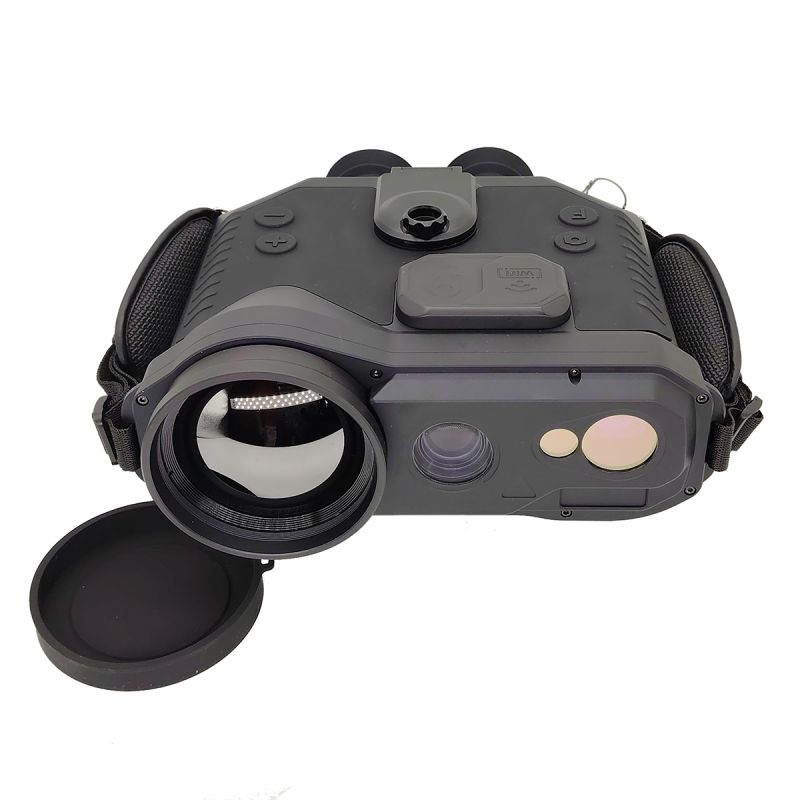
Before exploring operational dynamics and strategic implications, it is essential to outline the technical specifications that define thermal imaging instrumentation. These parameters directly influence image detail, environmental adaptability, measurement accuracy, and suitability for diverse industrial or field environments.
Key Technical Parameters of Thermal Imaging Systems
| Parameter | Description |
|---|---|
| Detector Type | Typically uncooled microbolometer arrays made from VOx or a-Si materials; used to capture infrared radiation in long-wave IR (LWIR) bands. |
| Spectral Range | Commonly 8–14 μm LWIR, optimized for industrial, security, and outdoor detection requirements. |
| Resolution | Standard resolutions include 256×192, 384×288, 640×512, and 1024×768 for high-density thermal detail. |
| NETD (Noise Equivalent Temperature Difference) | Indicates thermal sensitivity; values below <40 mK provide high clarity in low-contrast environments. |
| Temperature Measurement Range | Often spans from −20°C to 550°C for industrial inspections; can be extended up to 1500°C for specialized applications. |
| Frame Rate | Typical operational rates range from 9 Hz (for regulated markets) to 30 Hz and above for dynamic monitoring. |
| FOV (Field of View) | Depends on lens selection; wide-angle configurations support broad surveillance, while narrow-angle lenses support long-range detection. |
| Image Processing Algorithms | Includes temperature calibration, non-uniformity correction (NUC), noise suppression, dynamic contrast enhancement, and region-of-interest auto-analysis. |
| Output Interfaces | HDMI, USB, GigE, SDI, MIPI, and network-compatible outputs for seamless integration into embedded systems and monitoring platforms. |
| Environmental Protection | Options include IP66/IP67 enclosures, high-grade shock resistance, and operational stability across extreme temperatures or outdoor deployments. |
These parameters not only establish technical baselines for performance evaluation but also drive the operational outcomes that end-users rely on when conducting precision analysis, real-time monitoring, or mission-critical diagnostics.
How Thermal Imaging Detects Infrared Signatures with Accuracy
Thermal imaging operates through the principle that every object above absolute zero emits infrared radiation. Sensors within thermal imaging systems identify this radiation and assign temperature-dependent values to each pixel within the detector array. The detector converts these values into electrical signals, which are processed into a thermal representation that highlights temperature variations and gradient transitions.
The process begins when infrared energy passes through the optical system, typically composed of germanium lenses engineered for LWIR transmission. The microbolometer elements on the detector change resistance based on the thermal energy absorbed. This resistance shift is translated into temperature data, which is then processed by a digital signal processor (DSP) or onboard computing module. Through a combination of algorithmic corrections, calibration tables, and real-time compensation mechanisms, the system outputs a stable, high-contrast thermal image.
Operational accuracy is governed by sensitivity and noise suppression. In advanced thermal imaging systems, low NETD values allow the detection of minimal temperature differences—often crucial when identifying early-stage equipment anomalies, subtle insulation failures, or low-visibility threats. Additionally, thermal imaging does not require visible light, thereby enabling reliable imaging in complete darkness, environmental smoke, fog, and harsh atmospheric conditions. This makes thermal imaging indispensable in industrial safety inspections, emergency responses, and nighttime operations.
Furthermore, modern designs support adaptive temperature measurement. With multi-point thermal analysis, the instrument can lock onto specific targets, track temperature changes, and generate alerts for threshold breaches. This functionality enhances predictive maintenance workflows, enabling early detection of overheating components or mechanical stress points before they escalate into operational failures. In surveillance applications, the combination of precise heat signatures and long-range optics allows operators to identify intrusions or abnormal human and vehicle behaviors in low-visibility zones.
How Thermal Imaging Enhances Operational Efficiency Across Industries
Thermal imaging’s role extends far beyond simple heat visualization. It has become a strategic asset in operational diagnostics, risk mitigation, and quality assurance. Organizations deploy thermal imaging to compress inspection timelines, reduce manual intervention, and minimize costly downtime.
In utility and electrical systems, thermal imaging identifies hotspots in transformers, switchgear, and transmission lines long before they manifest into hazardous failures. The ability to detect loose connections, corrosion-induced resistance, and load-related anomalies empowers engineers to execute targeted maintenance interventions. Likewise, in manufacturing, thermal imaging enhances process monitoring, thermal uniformity detection in molding or casting operations, and continuous evaluation of heating elements, conveyor systems, or pneumatic assemblies.
Security agencies and perimeter protection professionals utilize thermal imaging for threat detection in low-light conditions. Since thermal patterns remain distinct regardless of ambient lighting, intruder recognition becomes more reliable at night or in concealed terrains. Large infrastructures such as warehouses, airports, and logistics hubs benefit from wide-coverage thermal imaging setups that detect unauthorized movement, equipment overheating, or concealed hazards.
Public safety and first-response teams rely on thermal imaging to locate individuals in dark environments, smoke-filled structures, or natural disaster zones. By contrasting human heat signatures against cooler backgrounds, search teams improve recovery timelines and reduce operational risk.
Environmental specialists leverage thermal imaging to study wildlife behavior, habitat temperature patterns, and the thermal performance of natural ecosystems. The technology also aids in conservation efforts by identifying hidden animals or analyzing structural heat loss in ecological monitoring projects.
How Innovations in Thermal Imaging Are Accelerating Future Development Trajectories
The rapid evolution of thermal imaging technology is driven by improvements in microbolometer fabrication, integrated processing algorithms, and intelligent system architectures. As sensors become more compact, power-efficient, and higher in resolution, adoption rates continue to expand across both industrial and consumer sectors.
One of the most significant innovations is the integration of AI-enhanced thermal analytics. These systems can identify patterns, categorize anomalies, and automatically interpret thermal signatures. When used in automation environments, they enable smart inspections where anomalies trigger alert protocols, initiate workflows, or integrate with cloud-based dashboards for centralized monitoring. This enhances operational precision, reduces manual oversight burdens, and accelerates decision-making.
Furthermore, the proliferation of multi-sensor fusion platforms—combining thermal with visible light, LiDAR, radar, or hyperspectral imagery—expands analytical depth and situational awareness. These hybrid systems provide unparalleled insight for applications such as autonomous navigation, industrial robotics, and comprehensive security systems.
Miniaturization is another key trend, enabling thermal imaging modules to be integrated into compact unmanned aerial vehicles (UAVs), handheld instruments, autonomous patrol robots, and embedded smart devices. As cost barriers continue to decrease, thermal imaging becomes more accessible to mid-range markets, thereby expanding its practical reach.
Additionally, sustainability-focused industries have adopted thermal imaging to optimize energy performance, evaluate building insulation, identify heat leakage, and reduce operational energy consumption. These trends contribute to long-term environmental objectives while offering corporate users measurable gains in efficiency.
How Thermal Imaging Supports Data-Driven Decision-Making in Modern Workflows
In modern workflows, data accuracy and real-time insights serve as the basis for tactical and strategic decisions. Thermal imaging provides quantifiable temperature data, automated analytics, and consistent output across variable environmental conditions. This offers decision-makers a robust foundation for planning, executing, and optimizing operations.
For example, in predictive maintenance frameworks, thermal data is processed and visualized on centralized dashboards, enabling cross-departmental collaboration. Engineers examine temperature curves, identify deviation patterns, and correlate thermal anomalies with mechanical or electrical performance records. As a result, organizations can forecast potential failures, schedule maintenance with greater efficiency, and extend the lifespan of critical assets.
In security operations centers, thermal imagery facilitates constant monitoring without reliance on visible light. Operators can track human or vehicle heat signatures, analyze behavioral paths, and record temperature-based evidence for incident evaluation. This improves security coverage and reduces blind spots commonly associated with traditional optical systems.
When integrated with automated control systems, thermal imaging provides a feedback loop for high-precision industrial processes. For instance, thermal data informs process controllers to regulate heating elements, adjust temperature-dependent variables, or maintain product uniformity in manufacturing lines. The resulting stability enhances production consistency and reduces quality-related losses.
In scientific research and field analysis, thermal imaging supports environmental mapping, geological assessment, chemical process monitoring, agricultural yield prediction, and climate-related data capture. These applications demonstrate the wide-ranging value of accurate thermal data in expanding human understanding and driving informed decision-making.
Frequently Asked Questions
Q: How accurate are thermal imaging temperature measurements?
A: Thermal imaging accuracy depends on detector sensitivity, calibration quality, emissivity settings, and environmental conditions. High-grade systems typically achieve temperature accuracy within ±2°C or ±2 percent of the reading. When properly calibrated and used with correct emissivity adjustments, thermal imaging reliably identifies small temperature deviations essential for industrial diagnostics, electrical system inspections, and precision safety assessments.
Q: How does environmental interference affect thermal imaging performance?
A: Environmental factors such as humidity, rain, fog, and airborne particles can impact infrared transmission. While thermal imaging remains functional in these conditions, image clarity may be reduced depending on wavelength absorption and scattering effects. Advanced processing algorithms counteract many of these challenges through contrast enhancement, noise suppression, and continuous correction routines. System positioning, lens selection, and operational configuration also help maintain accuracy in variable environments.
Thermal imaging is reshaping the operational landscape across multiple industries by delivering actionable insights, reliable visibility, and precision temperature analysis regardless of environmental lighting or conditions. As the technology continues to advance, its integration into industrial diagnostics, security infrastructures, environmental monitoring systems, and automated workflows becomes increasingly indispensable. For organizations seeking high-performance thermal imaging solutions optimized for professional and industrial applications, JIOPTICS provides a portfolio of reliable, high-resolution, and long-wave infrared systems engineered for consistent and data-driven performance.
For detailed product specifications, technical consultation, or system integration support, contact us to explore how thermal imaging solutions from JIOPTICS can strengthen your operational capabilities.