What Is a Fiber Optic Gyroscope and How Does It Improve Navigation?
Summary: Fiber optic gyroscopes (FOGs) are revolutionizing navigation systems across aerospace, maritime, and industrial applications. This article explores how FOGs work, their benefits, technical specifications, applications, and answers common questions to help businesses and engineers make informed decisions.
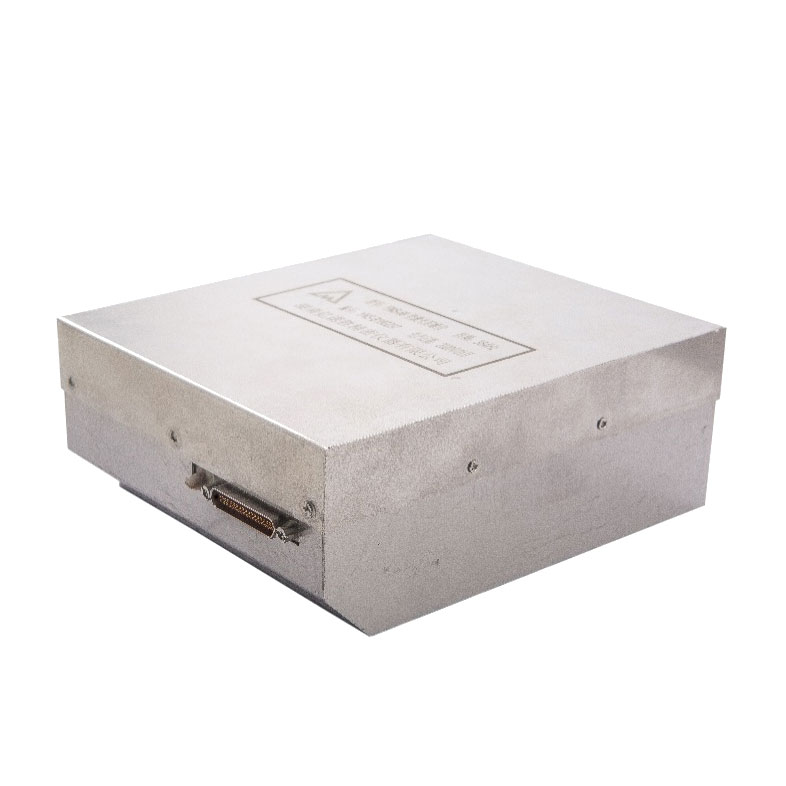
Table of Contents
- Introduction to Fiber Optic Gyroscopes
- Working Principle of Fiber Optic Gyroscopes
- Key Features and Advantages
- Technical Specifications
- Applications Across Industries
- FOG vs. Other Gyroscope Technologies
- Frequently Asked Questions
- Conclusion and Contact
Introduction to Fiber Optic Gyroscopes
Fiber optic gyroscopes are highly sensitive devices used to measure angular velocity without relying on mechanical moving parts. Unlike traditional gyroscopes, FOGs utilize the interference of light traveling through optical fibers to detect rotation. Their compact size, reliability, and resistance to environmental stresses make them ideal for critical navigation tasks in airplanes, ships, submarines, and autonomous vehicles.
Working Principle of Fiber Optic Gyroscopes
FOGs operate based on the Sagnac effect, which measures the phase shift of light traveling in opposite directions around a coil of optical fiber. The phase difference is proportional to the angular rotation of the gyroscope, allowing precise calculation of angular velocity.
- Light Source: A laser provides coherent light.
- Optical Fiber Coil: Light travels through a long, coiled fiber to detect rotation.
- Interference Detection: Light beams recombine to create interference patterns that quantify rotation.
- Signal Processing: Electronics convert optical interference into angular velocity measurements.
This design eliminates moving parts, resulting in long-term durability, low maintenance, and high accuracy even in harsh conditions.
Key Features and Advantages
- High precision with minimal drift
- Compact and lightweight design
- Resistance to vibration and temperature changes
- Non-mechanical, reducing wear and tear
- Fast response time suitable for dynamic navigation
- Scalable for different applications, from drones to ships
Technical Specifications
| Parameter | Typical Value |
|---|---|
| Angular Random Walk (ARW) | 0.001–0.01°/√hr |
| Bias Stability | 0.01–0.1°/hr |
| Operating Temperature | -40°C to +70°C |
| Power Supply | 5V DC / 12V DC options |
| Dimensions | 50mm x 50mm x 30mm (typical) |
| Weight | ≤150 grams |
Applications Across Industries
Fiber optic gyroscopes are widely used in various sectors where precision navigation and stability are critical:
- Aerospace: Flight control systems, satellite stabilization, UAV navigation.
- Maritime: Ship autopilots, submarine navigation, offshore platform stabilization.
- Automotive & Autonomous Vehicles: Self-driving cars, advanced driver-assistance systems (ADAS).
- Industrial Machinery: Robotic arms, precision manufacturing, drilling platforms.
- Defense: Missiles, armored vehicles, and military UAVs.
FOG vs. Other Gyroscope Technologies
Understanding how fiber optic gyroscopes compare with traditional gyroscopes is essential for selecting the right navigation solution:
| Feature | Fiber Optic Gyroscope (FOG) | Mechanical Gyroscope | MEMS Gyroscope |
|---|---|---|---|
| Accuracy | High (minimal drift) | Moderate | Low to Medium |
| Durability | Excellent, non-mechanical | Good, mechanical wear possible | Moderate |
| Size & Weight | Compact, lightweight | Bulkier | Very small |
| Cost | High | Medium | Low |
| Maintenance | Minimal | Regular calibration | Low |
Frequently Asked Questions
-
Q: Can a fiber optic gyroscope operate without GPS?
A: Yes, FOGs provide accurate angular measurements independently, making them ideal for GPS-denied environments. -
Q: How long is the typical lifespan of a FOG?
A: Fiber optic gyroscopes generally last over 20 years with minimal performance degradation due to the absence of moving parts. -
Q: Are FOGs sensitive to temperature changes?
A: High-quality FOGs are designed to maintain precision across a wide temperature range (-40°C to +70°C). -
Q: What industries benefit most from FOG technology?
A: Aerospace, maritime, defense, autonomous vehicles, and industrial robotics benefit significantly from FOGs due to their high accuracy and reliability.
Conclusion and Contact
Fiber optic gyroscopes are a cornerstone of modern navigation systems, providing unmatched precision, reliability, and durability. Shenzhen Jioptics Technology Co., Ltd offers advanced FOG solutions suitable for aerospace, maritime, automotive, and industrial applications. Enhance your navigation systems and reduce operational risks by integrating high-quality fiber optic gyroscopes into your platform. Contact us today to discuss your requirements and find the ideal solution.