Why Is AESA Radar Becoming the Most Critical Technology for Modern Defense and Surveillance Systems
Advanced military operations, air defense networks, border surveillance systems, and next-generation combat platforms increasingly rely on AESA Radar technology. As threats become more sophisticated and environments more complex, traditional radar solutions often struggle to deliver the speed, accuracy, and reliability required by modern missions.
This article explores how AESA Radar works, why it has become a game-changing technology, its advantages over conventional radar systems, practical applications, and what organizations should consider when selecting an advanced radar solution. Drawing on industry insights and technologies offered by Jioptics, we will examine why AESA systems are shaping the future of defense and surveillance worldwide.
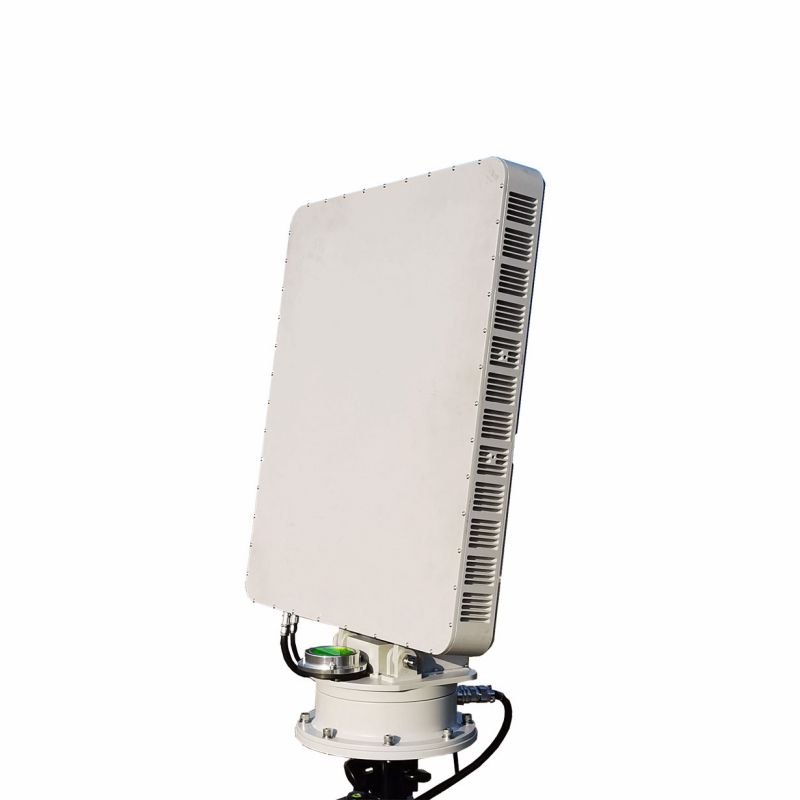
Table of Contents
What Are the Main Advantages of AESA Radar?
How Does AESA Radar Compare with Traditional Radar?
Where Is AESA Radar Used Today?
Why Are Companies Like Jioptics Investing in Advanced Radar Solutions?
How Should Buyers Select an AESA Radar System?
What Is AESA Radar?
AESA Radar, short for Active Electronically Scanned Array Radar, is a radar architecture that uses numerous independent transmitter and receiver modules arranged across an antenna array. Unlike mechanically scanned radar systems that physically rotate an antenna, AESA technology electronically directs radar beams at nearly instantaneous speeds.
Each transmit/receive module can operate independently, enabling exceptional flexibility in beam steering, target tracking, and signal processing.
This advanced architecture allows AESA Radar systems to:
- Track multiple targets simultaneously
- Switch between surveillance and targeting functions instantly
- Reduce detection vulnerabilities
- Improve mission survivability
- Increase operational reliability
These advantages have made AESA Radar a standard technology in modern fighter aircraft, naval vessels, ground defense systems, and strategic surveillance platforms.
How Does AESA Radar Work?
The operating principle of an AESA Radar revolves around electronically controlled phase shifting.
Instead of moving the antenna physically, each transmit/receive module emits radio frequency signals with carefully controlled timing differences. These phase differences create constructive and destructive interference patterns that steer the radar beam electronically.
The process generally follows these steps:
- Transmit modules generate radar signals.
- Phase shifters control signal timing.
- The antenna array forms a directed beam.
- Reflected signals return from targets.
- Receivers process echoes using advanced algorithms.
- Targets are identified, tracked, and classified.
Because beam steering occurs electronically, AESA Radar systems can shift focus from one target to another within microseconds.
What Are the Main Advantages of AESA Radar?
Superior Detection Performance
AESA Radar systems can detect low-observable targets at greater distances while maintaining high tracking accuracy.
Rapid Beam Steering
Electronic beam control enables virtually instantaneous target acquisition without mechanical limitations.
Enhanced Reliability
Since the radar consists of numerous independent modules, failure of a few elements rarely affects overall performance.
Electronic Warfare Resistance
Modern battlefields involve sophisticated jamming threats. AESA Radar systems are highly resistant to electronic interference due to adaptive beamforming techniques.
Multi-Mission Capability
One AESA Radar can simultaneously perform:
- Target detection
- Tracking
- Weapon guidance
- Terrain mapping
- Electronic intelligence gathering
How Does AESA Radar Compare with Traditional Radar?
| Feature | AESA Radar | Traditional Mechanical Radar |
|---|---|---|
| Beam Steering | Electronic | Mechanical Rotation |
| Target Tracking Speed | Extremely Fast | Moderate |
| Multi-Target Capability | Excellent | Limited |
| Reliability | Very High | Moderate |
| Resistance to Jamming | Strong | Lower |
| Maintenance Requirement | Lower | Higher |
| Operational Flexibility | Outstanding | Limited |
This comparison highlights why military organizations worldwide are replacing older radar technologies with AESA Radar systems.
Where Is AESA Radar Used Today?
Military Aircraft
Modern fighter jets rely heavily on AESA Radar for air superiority missions. These systems enable pilots to detect threats earlier and engage multiple targets simultaneously.
Naval Defense
Warships use AESA Radar to monitor airspace, detect incoming missiles, and coordinate defense systems.
Ground-Based Air Defense
Surface-to-air missile systems increasingly depend on AESA Radar for accurate target acquisition and engagement.
Border Surveillance
Governments deploy AESA Radar networks to monitor large geographic areas and identify unauthorized activities.
Space and Missile Tracking
Advanced radar installations support ballistic missile warning systems and space object monitoring programs.
Why Are Companies Like Jioptics Investing in Advanced Radar Solutions?
As defense requirements evolve, companies such as Jioptics continue investing in cutting-edge radar technologies designed to improve operational effectiveness, situational awareness, and mission success.
The demand for modern AESA Radar systems is driven by:
- Growing security challenges
- Increasing electronic warfare threats
- Demand for long-range detection
- Need for higher tracking precision
- Reduced lifecycle maintenance costs
Organizations seeking advanced radar capabilities increasingly turn to trusted manufacturers and solution providers that can deliver customized systems tailored to specific mission requirements.
How Should Buyers Select an AESA Radar System?
Selecting the right AESA Radar requires evaluating multiple technical and operational factors.
Detection Range
Determine the maximum target distance required for mission success.
Target Capacity
Assess how many targets must be tracked simultaneously.
Frequency Band
Different radar bands offer varying advantages in range, resolution, and environmental performance.
Electronic Counter-Countermeasures
The radar should provide strong resilience against jamming and electronic attacks.
Integration Requirements
Ensure compatibility with existing command, control, and communication systems.
Lifecycle Costs
Consider maintenance requirements, spare parts availability, and long-term operational expenses.
What Is the Future of AESA Radar Technology?
The future of AESA Radar is closely linked to advancements in semiconductor materials, artificial intelligence, and digital signal processing.
Several emerging trends are shaping the next generation of radar systems:
- Gallium Nitride (GaN) power amplifiers
- AI-enhanced target recognition
- Cognitive radar technologies
- Integrated sensor fusion
- Network-centric battlefield operations
- Autonomous surveillance platforms
Future AESA Radar systems will become more intelligent, energy-efficient, compact, and capable of operating in increasingly contested environments.
As military modernization programs accelerate worldwide, demand for advanced radar technologies is expected to continue growing significantly over the coming decades.
Frequently Asked Questions (FAQ)
What does AESA stand for?
AESA stands for Active Electronically Scanned Array, a radar technology that electronically directs beams using multiple transmit/receive modules.
Why is AESA Radar better than traditional radar?
AESA Radar provides faster beam steering, improved reliability, stronger anti-jamming capabilities, and superior multi-target tracking performance.
Can AESA Radar track multiple targets at once?
Yes. One of the key strengths of AESA Radar is its ability to simultaneously detect, track, and engage multiple targets.
Where is AESA Radar commonly deployed?
It is widely used in fighter aircraft, naval ships, ground defense systems, missile defense networks, and surveillance platforms.
What technologies are driving future AESA Radar development?
Key technologies include Gallium Nitride semiconductors, artificial intelligence, machine learning, advanced signal processing, and sensor fusion systems.
Conclusion
The evolution of modern defense and surveillance systems has made AESA Radar one of the most important technologies in the world today. Its unmatched ability to provide rapid beam steering, multi-target tracking, electronic warfare resistance, and operational reliability makes it a cornerstone of next-generation security infrastructure.
Whether deployed in advanced fighter aircraft, naval vessels, missile defense systems, or strategic surveillance networks, AESA Radar continues to redefine what is possible in modern situational awareness and threat detection.
Looking for a reliable partner for advanced radar solutions? Jioptics offers innovative radar technologies designed to meet the demanding requirements of modern defense, surveillance, and security applications. If you would like to learn more about our AESA Radar capabilities or discuss your project requirements, contact us today. Our team is ready to help you identify the most effective radar solution for your mission objectives and long-term operational success.