Why Are 1535nm Er Glass Lasers Becoming the Preferred Choice for Modern Laser Rangefinding and Sensing Applications?
As laser technology continues to advance across defense, aerospace, surveying, remote sensing, and industrial measurement sectors, the demand for eye-safe, high-performance laser sources has increased significantly. Among the various solid-state laser technologies available today, 1535nm Er Glass Lasers have emerged as one of the most reliable and widely adopted solutions for precision distance measurement and sensing applications.
Operating at a wavelength that is considered eye-safe under many operating conditions, erbium glass laser systems provide a unique balance between performance, compactness, efficiency, and safety. Their growing adoption across military and commercial markets highlights their technological advantages and long-term value.
This article explores the operating principles, technical benefits, application scenarios, and future development trends of erbium glass laser technology while helping industry professionals understand why these laser systems continue to gain global attention.
Article Summary
- Understand the fundamentals of erbium glass laser technology.
- Explore why 1535nm wavelength lasers are considered eye-safe.
- Learn about key advantages in rangefinding and sensing systems.
- Review major industrial, military, and scientific applications.
- Compare erbium glass lasers with alternative laser technologies.
- Discover future trends and innovations driving market growth.
Table of Contents
- What Are Erbium Glass Lasers?
- Why Is the 1535nm Wavelength So Important?
- How Do Erbium Glass Laser Systems Work?
- Key Technical Advantages
- Major Application Areas
- Performance Comparison with Other Laser Technologies
- Market Trends and Industry Development
- How to Select the Right Laser Solution
- Future Outlook
- Frequently Asked Questions
What Are Erbium Glass Lasers?
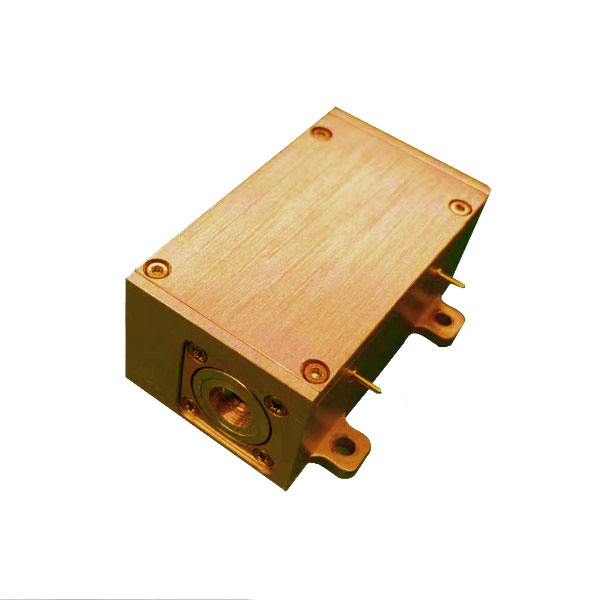
Erbium glass lasers are solid-state laser devices that utilize erbium ions doped into a specialized glass host material. When pumped by semiconductor laser diodes, the erbium ions become excited and generate laser emission around the 1535nm wavelength region.
This wavelength is particularly attractive because it falls within a spectral range that offers excellent atmospheric transmission while maintaining improved eye safety characteristics compared with many traditional laser wavelengths.
Modern laser rangefinders, LiDAR systems, target designation equipment, and remote sensing instruments frequently rely on erbium glass laser technology to achieve accurate distance measurements and dependable field performance.
The continuous advancement of 1535nm Er Glass Lasers has enabled manufacturers to develop compact, lightweight, and highly efficient laser modules suitable for demanding operational environments.
Why Is the 1535nm Wavelength So Important?
The selection of laser wavelength directly affects safety, transmission efficiency, atmospheric performance, and detector compatibility.
At 1535nm, laser energy is strongly absorbed in the front portions of the human eye rather than reaching the retina. This characteristic significantly reduces retinal damage risks under many operational conditions, making the wavelength highly desirable for rangefinding applications.
Advantages of the 1535nm Spectral Region
- Improved eye safety performance
- Excellent atmospheric transmission
- Reduced background noise interference
- High compatibility with modern optical systems
- Suitable for long-distance measurement
- Reliable operation in complex environments
These characteristics have made the 1535nm wavelength a preferred option for organizations requiring both operational effectiveness and regulatory compliance.
How Do Erbium Glass Laser Systems Work?
The operation of an erbium glass laser involves several coordinated processes.
Step 1: Diode Pumping
Laser diode pumps inject energy into the erbium-doped glass medium. The pump energy excites erbium ions into higher energy states.
Step 2: Energy Storage
The excited erbium ions store energy within the gain medium, creating a population inversion necessary for laser generation.
Step 3: Laser Emission
Through stimulated emission, coherent laser light at approximately 1535nm is produced.
Step 4: Pulse Formation
Q-switching technologies are often incorporated to generate high-peak-power pulses suitable for long-range measurement applications.
Step 5: Target Detection
The emitted pulse travels toward a target and reflects back to a detector, enabling distance calculations through time-of-flight measurement.
This operating principle allows laser systems to provide highly accurate and repeatable ranging performance across a wide range of applications.
Key Technical Advantages
Several technical characteristics contribute to the growing popularity of erbium glass laser systems.
1. Eye-Safe Operation
Safety remains one of the most significant advantages. Eye-safe wavelengths reduce operational risks and simplify deployment in populated environments.
2. Compact Design
Modern manufacturing techniques enable highly integrated laser modules with reduced size and weight.
3. High Reliability
Solid-state architectures provide excellent durability and long service life under demanding operating conditions.
4. Excellent Beam Quality
High beam quality supports accurate target acquisition and long-distance performance.
5. Low Maintenance Requirements
Compared with some alternative technologies, erbium glass systems generally require less routine maintenance.
Technical Benefits Overview
| Feature | Benefit |
|---|---|
| Eye-Safe Wavelength | Enhanced operational safety |
| Compact Structure | Easier system integration |
| High Pulse Energy | Long-distance detection capability |
| Stable Performance | Reliable operation in harsh environments |
| Long Lifetime | Lower ownership costs |
Major Application Areas
The versatility of erbium glass laser technology supports numerous applications across multiple industries.
Defense and Military Systems
- Laser rangefinders
- Target acquisition equipment
- Fire control systems
- Observation platforms
- Portable reconnaissance devices
Aerospace Applications
- Aircraft navigation systems
- Altitude measurement
- Obstacle detection
- Remote sensing payloads
Surveying and Mapping
- Precision distance measurement
- Terrain mapping
- Geospatial data collection
- Infrastructure inspection
Scientific Research
- Atmospheric studies
- Optical experiments
- Environmental monitoring
- Advanced sensing systems
Industrial Applications
- Automation systems
- Position measurement
- Safety monitoring
- Inspection equipment
As performance requirements continue to increase, demand for 1535nm Er Glass Lasers is expected to expand across both traditional and emerging markets.
Performance Comparison with Other Laser Technologies
| Technology | Typical Wavelength | Eye Safety | Rangefinding Suitability | Integration |
|---|---|---|---|---|
| Erbium Glass Laser | 1535nm | Excellent | Excellent | Excellent |
| Nd:YAG Laser | 1064nm | Moderate | Excellent | Good |
| Fiber Laser | Various | Depends on design | Good | Excellent |
| CO₂ Laser | 10.6μm | Good | Limited | Moderate |
This comparison illustrates why erbium glass technology has become increasingly favored in applications where eye safety and precise ranging capabilities are critical.
Market Trends and Industry Development
Several factors are driving growth within the global laser market.
Increasing Demand for Eye-Safe Systems
Organizations are prioritizing safety-compliant technologies that can be deployed in both military and civilian environments.
Miniaturization of Optical Systems
Smaller and lighter equipment enables deployment on portable platforms, unmanned systems, and compact sensors.
Growth of Autonomous Technologies
Advanced sensing solutions require reliable laser sources capable of delivering accurate measurement data.
Expansion of Remote Sensing Applications
Environmental monitoring, mapping, and infrastructure assessment continue to create new opportunities for laser-based systems.
These trends support continued investment in 1535nm Er Glass Lasers and associated photonic technologies.
How to Select the Right Laser Solution
Selecting the optimal laser module requires careful evaluation of application requirements.
Important Considerations
- Pulse energy requirements
- Measurement range objectives
- System integration constraints
- Environmental operating conditions
- Power consumption limitations
- Reliability expectations
- Regulatory requirements
Working with an experienced manufacturer can help ensure proper system selection and long-term project success.
Organizations seeking advanced optical technologies often partner with Jioptics because of its focus on laser innovation, photonic engineering, and customized optical solutions.
Future Outlook
The future of erbium glass laser technology appears exceptionally promising. Improvements in crystal growth, pump efficiency, optical coatings, thermal management, and system integration will continue to enhance overall performance.
Emerging applications in autonomous systems, intelligent sensing networks, aerospace platforms, and next-generation defense technologies are expected to further accelerate adoption.
As industry requirements evolve, 1535nm Er Glass Lasers will remain an essential enabling technology for precision measurement, advanced sensing, and reliable long-range detection solutions.
Frequently Asked Questions
1. What makes 1535nm lasers eye-safe?
The wavelength is absorbed primarily before reaching the retina, reducing the potential for retinal damage compared with shorter wavelengths.
2. What industries commonly use erbium glass lasers?
Defense, aerospace, surveying, remote sensing, industrial automation, and scientific research sectors widely use these laser systems.
3. Are erbium glass lasers suitable for long-distance ranging?
Yes. Their pulse characteristics and atmospheric transmission properties make them highly effective for long-range distance measurement.
4. Can erbium glass lasers be integrated into portable systems?
Yes. Modern designs are compact and lightweight, making them suitable for handheld and mobile platforms.
5. Why are these lasers becoming more popular?
Their combination of eye safety, reliability, compactness, and high-performance ranging capability makes them attractive for modern sensing applications.
Conclusion
The evolution of laser technology continues to reshape the capabilities of modern sensing and measurement systems. By combining eye-safe operation, strong ranging performance, compact integration, and long-term reliability, erbium glass laser solutions have established themselves as a critical technology across numerous industries.
Whether applied in military rangefinding, aerospace sensing, surveying equipment, or advanced industrial platforms, 1535nm Er Glass Lasers offer a compelling balance of safety and performance that meets the demands of today's most challenging applications.
For more information about advanced laser technologies and customized optical solutions, contact us today and discover how our engineering expertise can support your next project.