How Does a Ring Laser Gyroscope High Precision Two Frequency Machine Shaking Enhance Navigational Accuracy
Article Summary: This blog delves into the mechanics, advantages, and applications of the Ring Laser Gyroscope High Precision Two Frequency Machine Shaking. We explore how this advanced technology improves navigational accuracy, the engineering behind two-frequency oscillation, and the latest trends from JIoptics in gyroscope design. The blog also includes practical examples, comparisons, and FAQs to address common inquiries, ensuring readers gain comprehensive knowledge about this sophisticated navigational tool.
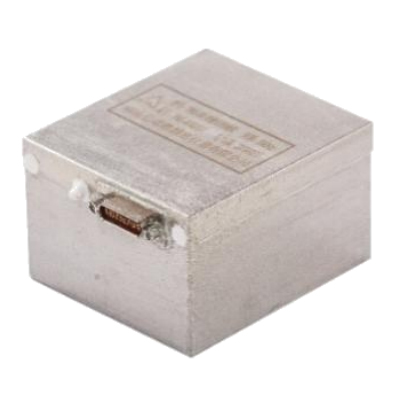
Table of Contents
- Introduction to Ring Laser Gyroscope High Precision Two Frequency Machine Shaking
- Working Principle of Two-Frequency Machine Shaking
- Advantages Over Conventional Gyroscopes
- Key Applications in Navigation and Aerospace
- Technical Specifications
- Common Challenges and Solutions
- Frequently Asked Questions (FAQ)
- Conclusion
Introduction to Ring Laser Gyroscope High Precision Two Frequency Machine Shaking
The Ring Laser Gyroscope (RLG) High Precision Two Frequency Machine Shaking is a cutting-edge technology designed to achieve ultra-precise angular velocity measurements. Unlike conventional gyroscopes, the two-frequency oscillation mechanism reduces bias drift, improves stability, and enhances long-term accuracy. Companies like JIoptics have been pioneering these innovations, making them ideal for aerospace, defense, and high-precision navigation systems.
- Reduces error caused by environmental vibrations
- Improves long-term stability of navigation systems
- Enables precise measurement even in complex motion scenarios
Working Principle of Two-Frequency Machine Shaking
The two-frequency machine shaking mechanism involves generating two slightly different laser frequencies within a ring-shaped optical cavity. These two frequencies interact to form a beat frequency, which is sensitive to rotational changes. This design mitigates mode locking and enhances measurement precision.
| Parameter | Traditional RLG | Two-Frequency Machine Shaking RLG |
|---|---|---|
| Bias Drift | 0.01°/hr | 0.001°/hr |
| Noise Level | 0.005°/√hr | 0.0005°/√hr |
| Stability | Good | Excellent |
| Application Range | Moderate | Wide (Aerospace & Military) |
JIoptics utilizes advanced optical components and vibration damping mechanisms to ensure the two-frequency RLG maintains exceptional performance under dynamic conditions.
Advantages Over Conventional Gyroscopes
The Ring Laser Gyroscope High Precision Two Frequency Machine Shaking offers multiple advantages:
- Reduced Environmental Impact: Minimizes measurement errors caused by temperature fluctuations, vibrations, and shock.
- High Accuracy: Achieves sub-arcsecond precision due to two-frequency operation.
- Long-Term Stability: Maintains performance over extended missions without recalibration.
- Compact Design: Modern RLGs are smaller and lighter, fitting into constrained aerospace environments.
Key Applications in Navigation and Aerospace
The high precision and stability of the two-frequency RLG make it ideal for:
- Aerospace Navigation: Used in aircraft, spacecraft, and satellites for accurate orientation.
- Military Guidance Systems: Critical for missiles, submarines, and naval vessels.
- Marine Navigation: Enhances stability of ships in rough seas.
- Industrial Robotics: Precision motion control in automated factories.
Technical Specifications
Below is a detailed specification overview of a typical high-precision two-frequency RLG provided by JIoptics:
| Specification | Value |
|---|---|
| Angular Random Walk (ARW) | 0.0005°/√hr |
| Bias Stability | 0.001°/hr |
| Operating Temperature | -40°C to +70°C |
| Weight | 4.5 kg |
| Size | 180mm x 180mm x 100mm |
Common Challenges and Solutions
Despite their advantages, two-frequency RLGs face some technical challenges:
- Mode Locking: Solved by precise optical cavity design and temperature control.
- Vibration Sensitivity: Reduced via advanced damping systems.
- Laser Aging: Mitigated by high-quality laser sources and regular maintenance.
- Cost: Although initially expensive, long-term reliability reduces overall lifecycle cost.
Frequently Asked Questions (FAQ)
- What is the difference between a traditional RLG and a two-frequency machine shaking RLG?
- The two-frequency RLG reduces bias drift and improves stability by using two slightly different laser frequencies to counteract mode locking.
- Can the high-precision RLG be used in extreme environments?
- Yes. Products from JIoptics are designed to operate in temperatures ranging from -40°C to +70°C and withstand vibrations and shocks.
- How does two-frequency operation enhance accuracy?
- By generating a beat frequency, the RLG can detect minute rotational changes with extremely low noise and drift.
- What industries benefit most from this technology?
- Aerospace, defense, marine navigation, and robotics are primary industries that require the ultra-precise measurements offered by this technology.
Conclusion
The Ring Laser Gyroscope High Precision Two Frequency Machine Shaking represents a major advancement in navigational technology. Its ability to maintain extreme accuracy under varying conditions makes it invaluable in aerospace, defense, and precision industries. With cutting-edge solutions from JIoptics, users can rely on improved stability, reduced drift, and enhanced long-term performance. For inquiries or customized solutions tailored to your navigation needs, contact us today and discover how our advanced RLG systems can elevate your operational precision.